How to Choose the Right Spawn Mop for Your Fish
A complete DSS Aquatics guide to choosing the
best spawn mop for Medaka ricefish, killifish,
rainbowfish, danios, White Cloud Mountain Minnows,
Corydoras, and other egg-scattering species.
What Is a Spawn Mop?
A spawn mop is a simple but highly effective breeding tool used to collect eggs from egg-scattering freshwater fish. Instead of allowing eggs to fall into substrate, plants, or areas where they may be eaten, a spawning mop gives fish a safe, reusable surface where they can deposit eggs.
Spawn mops are especially useful for Medaka ricefish, killifish, rainbowfish, danios, White Cloud Mountain Minnows, Corydoras, and many other freshwater species. They make egg collection easier, improve breeding control, and help hobbyists separate eggs for hatching and fry raising.
Why Choosing the Right Spawn Mop Matters
DSS Spawn Mop Lineup Overview
DSS Aquatics offers four spawn mop designs developed to meet the needs of different fish species, breeding group sizes, and aquarium setups. From nano breeding tanks to large outdoor tubs and fish room colonies, each mop serves a specific purpose while providing a reliable spawning surface for egg-scattering fish.
Understanding the strengths of each design will help you select the best option for your breeding goals.
DSS Nano Spawn Mop
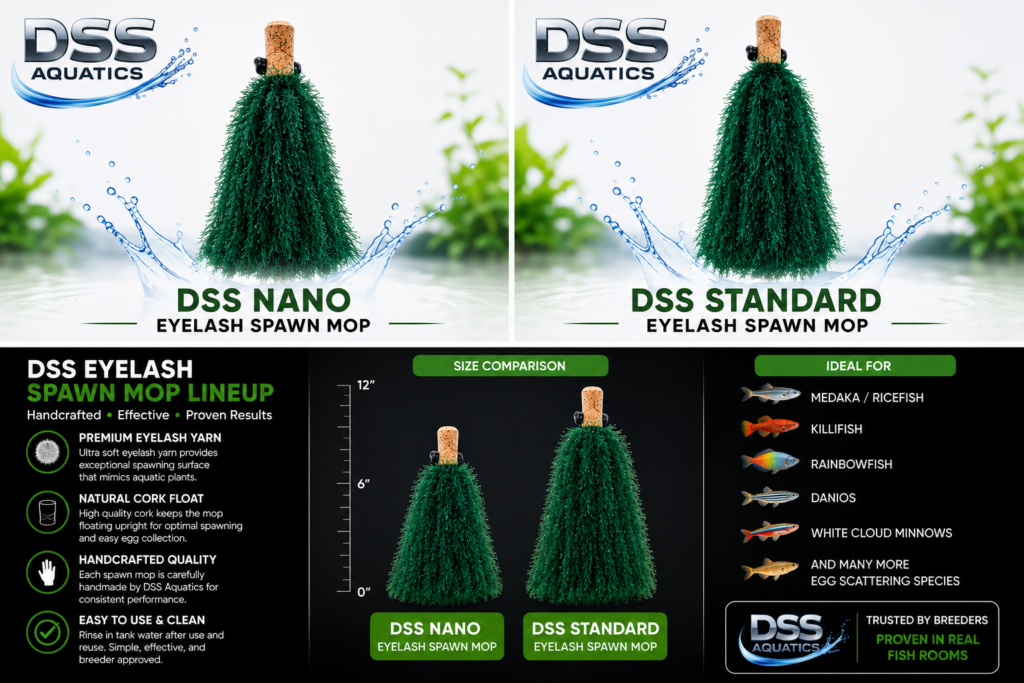
The DSS Nano Spawn Mop is handcrafted using premium eyelash yarn and a natural wine cork float. Its compact design makes it ideal for nano aquariums, small breeding setups, and hobbyists working with limited space. The soft eyelash yarn creates excellent egg attachment surfaces while remaining easy to inspect and collect eggs from.
Ideal for:
- Small Medaka groups
- Nano aquariums
- Small breeding projects
DSS Standard Spawn Mop
The DSS Standard Spawn Mop is the most versatile mop in the lineup. Built with premium eyelash yarn and a natural wine cork float, it provides increased spawning surface area for larger breeding groups and medium-sized aquariums. For many hobbyists, this is the ideal all-around spawning mop.
Ideal for:
- Most community breeders
- Rainbowfish
- Danios
- Medium breeding groups
DSS Standard Acrylic Spawn Mop
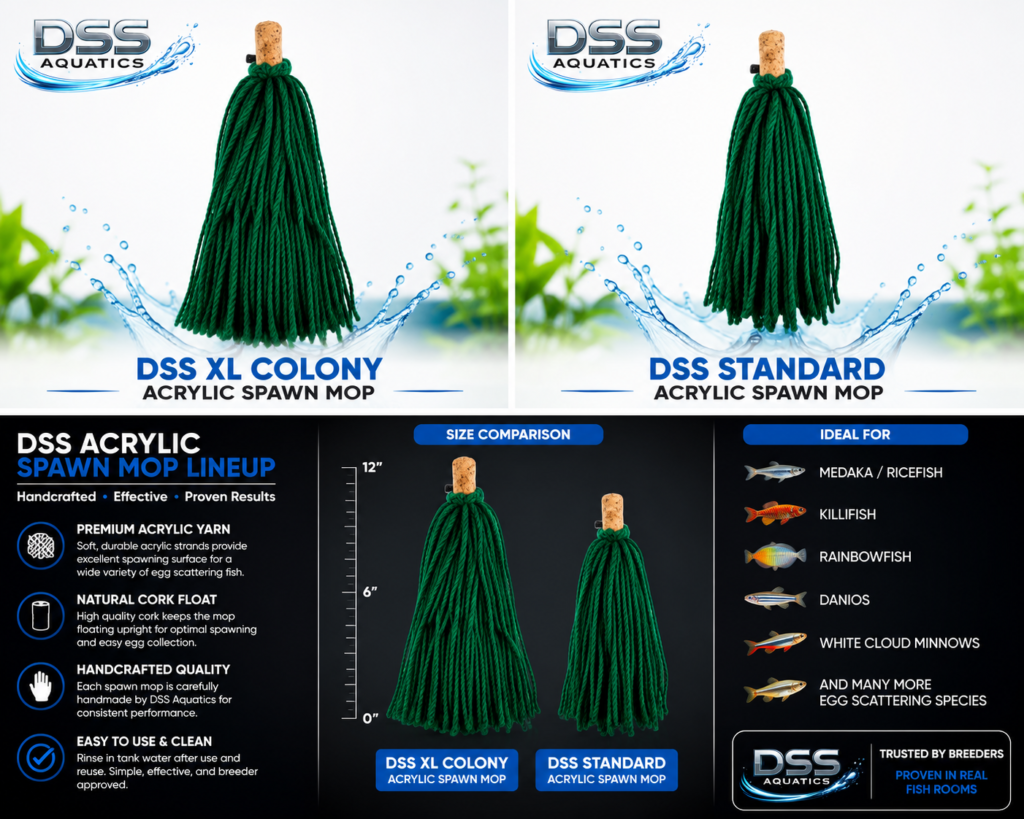
The DSS Standard Acrylic Spawn Mop utilizes traditional acrylic yarn preferred by many long-time breeders. Acrylic fibers remain easy to inspect, clean, and reuse while providing reliable egg attachment surfaces. This design is particularly useful for breeders who prioritize durability and simple egg collection.
Ideal for:
- Traditional breeders
- Easy egg inspection
- Fish rooms
- Reusable setups
DSS XL Colony Spawn Mop
The DSS XL Colony Spawn Mop was developed specifically for larger breeding systems. Measuring approximately 10 inches in length, it provides significantly more spawning surface than standard mops. The traditional acrylic yarn construction prevents excessive density while allowing breeders to inspect eggs efficiently across large spawning groups.
Ideal for:
- Large breeding colonies
- Outdoor tubs
- Pond breeding
- 75+ gallon systems
How to Collect Eggs from a Spawn Mop
One of the biggest advantages of using a spawn mop is the ability to easily locate, inspect, and collect eggs. Proper egg collection helps improve hatch rates, protects developing embryos from predation, and allows breeders to monitor spawning activity more effectively.
Step 1: Inspect the Spawn Mop
Carefully remove the spawn mop from the aquarium or breeding tub and inspect the yarn strands under good lighting. Fish eggs are often clear, translucent, or slightly amber in color depending on the species and stage of development.
Step 2: Locate the Eggs
Most egg-scattering species attach eggs directly to the yarn fibers. Slowly separate the strands and inspect each section of the mop. Taking your time helps prevent eggs from being overlooked or accidentally damaged.
Step 3: Remove the Eggs
Using clean fingers or soft tweezers, gently roll the eggs away from the yarn fibers. Healthy eggs should remain firm and intact. Avoid applying excessive pressure, as developing embryos can be damaged.
Step 4: Transfer to a Hatching Container
Place collected eggs into a clean hatching container with water that matches the breeding aquarium’s parameters. Gentle aeration and stable temperatures can help improve hatch success.
Step 5: Monitor Daily
Inspect eggs daily for development. Remove any unfertilized or fungus-covered eggs promptly to help maintain water quality and improve survival rates for healthy embryos.
DSS Aquatics Breeder Tip
Many Medaka breeders prefer checking spawn mops daily during peak breeding season. Frequent collection can improve hatch rates, simplify record keeping, and reduce the chances of eggs being lost or eaten.
Common Spawn Mop Mistakes to Avoid
Even the best spawn mop can produce disappointing results if it is used incorrectly. Avoiding a few common mistakes can significantly improve spawning success, egg collection efficiency, and hatch rates.
Mistake #1: Choosing the Wrong Mop Size
One of the most common breeding mistakes is using a spawn mop that is too small for the number of fish being spawned. Larger breeding groups often require additional spawning surface area to support consistent egg production.
For small breeding groups and nano aquariums, the DSS Nano Spawn Mop is often sufficient. Larger breeding groups may benefit from the DSS Standard, Standard Acrylic, or XL Colony Spawn Mop.
Mistake #2: Not Checking Mops Frequently
Many breeders leave spawn mops unattended for extended periods. Regular inspection allows eggs to be collected before they are damaged, eaten, or lost among heavily used spawning fibers.
Daily inspections are recommended during active spawning periods.
Mistake #3: Using Dirty Spawn Mops
Spawn mops should be inspected and cleaned periodically. Excess waste, algae, or debris can reduce water quality and make egg collection more difficult. Clean spawning mops also allow breeders to inspect eggs more easily.
Mistake #4: Overcrowding Breeding Groups
A spawn mop can encourage spawning activity, but overcrowded breeding tanks can still create stress and competition. Maintaining proper stocking levels helps improve breeding behavior and overall fish health.
Mistake #5: Ignoring Egg Development
Collecting eggs is only the first step. Successful breeders monitor eggs daily for signs of development, fungus, and hatch readiness. Early detection of problems can dramatically improve fry survival rates.
DSS Aquatics Breeder Tip
The most successful breeders develop a consistent routine. Regular spawn mop inspections, daily egg collection, and careful observation of breeding behavior often produce better results than simply leaving breeding tanks unattended.
Choosing the Best Spawn Mop for Your Breeding Goals
Successful fish breeding starts with providing the right environment, the right fish, and the right spawning tools. While every egg-scattering species has unique breeding behaviors, selecting the appropriate spawn mop can make egg collection easier, improve organization, and help maximize breeding success.
The DSS Nano Spawn Mop is an excellent choice for small breeding groups, nano aquariums, and hobbyists focused on species such as Medaka Ricefish and small killifish. The DSS Standard Spawn Mop offers the greatest versatility and is often the ideal all-around option for community breeders working with Medaka, Rainbowfish, Danios, White Cloud Mountain Minnows, and other egg-scattering species.
For breeders who prefer traditional acrylic yarn, the DSS Standard Acrylic Spawn Mop provides a durable, easy-to-maintain spawning surface that remains popular among experienced fish breeders. When breeding large colonies, operating fish rooms, or managing outdoor tubs and pond systems, the DSS XL Colony Spawn Mop delivers the expanded spawning surface needed to support higher egg production and larger breeding populations.
No matter which spawning mop you choose, success ultimately comes from consistency. Regular inspections, careful egg collection, proper hatching procedures, and attention to fish health will help produce stronger hatch rates and healthier fry.
At DSS Aquatics, every spawn mop is designed, tested, and used in real-world breeding environments. Our goal is simple: provide fish breeders with reliable, practical tools that help make breeding easier, more productive, and more enjoyable.
Whether you’re collecting your first Medaka eggs or managing a large breeding colony, there’s a DSS Spawn Mop designed to fit your setup and breeding goals.
Ready to Start Breeding?
Explore the complete DSS Aquatics Spawn Mop lineup and find the perfect spawning solution for your fish room, aquarium, or outdoor breeding setup.
✔ DSS Nano Spawn Mop
✔ DSS Standard Spawn Mop
✔ DSS Standard Acrylic Spawn Mop
✔ DSS XL Colony Spawn Mop
Built by a breeder. Tested by a breeder. Trusted in real-world fish rooms.
Last Updated: June 2026
Author: DSS Aquatics
Category: Breeding Guides
Related Resources:
• Nano vs Standard vs Acrylic vs XL Colony Spawn Mops
• Medaka Ricefish Care & Breeding Guide
• How to Collect and Hatch Fish Eggs