Clear water is one of the biggest goals for freshwater aquarium hobbyists, and choosing the right filter plays a major role in maintaining a healthy, stable ecosystem. The best aquarium filters not only remove debris and waste but also support beneficial bacteria that keep ammonia and nitrite levels under control.
In this guide, we review several popular aquarium filter types and explain which options work best for nano tanks, planted aquariums, shrimp setups, and larger freshwater systems. Whether you’re a beginner setting up your first aquarium or an experienced hobbyist upgrading equipment, understanding filtration can dramatically improve water clarity and fish health.
Types of Aquarium Filters
Aquarium filters generally fall into several major categories, each with strengths and weaknesses depending on tank size, livestock, and maintenance preferences.
Hang-On-Back (HOB) Filters:
Popular for beginner aquariums and medium-sized freshwater tanks. Easy to install and maintain while providing solid mechanical and biological filtration.
Sponge Filters:
Excellent for shrimp tanks, fry tanks, and nano aquariums. Gentle flow and highly beneficial for biological filtration.
Canister Filters:
Best suited for larger aquariums and aquascapes requiring superior filtration capacity and crystal-clear water. Canister filters provide powerful mechanical, chemical, and biological filtration.
Internal Filters:
Compact filters designed for smaller aquariums. Good for basic filtration but typically less powerful than HOB or canister systems.
Top Recommended Aquarium Filters
- AquaClear Hang-On-Back Filter
Best For:
Beginner freshwater aquariums from 10–50 gallons.
Overview:
The AquaClear HOB filter is widely considered one of the best beginner-friendly aquarium filters due to its reliability, customizable media basket, and strong biological filtration capabilities. Unlike many budget HOB filters, AquaClear units allow hobbyists to customize filter media for better long-term water quality.
Pros:
- Excellent biological filtration
- Adjustable flow rate
- Easy maintenance
- Quiet operation
- Long-lasting motor design
Cons:
- Slightly bulkier than some competing HOB filters
- Intake may require a sponge pre-filter for shrimp tanks
Ideal For:
Community tanks, beginner aquariums, planted tanks, and general freshwater setups.
Overall Rating:
9/10
Sponge Filters
Best For:
Shrimp tanks, fry tanks, betta tanks, and nano aquariums.
Overview:
Sponge filters are simple, affordable, and extremely effective biological filters. They are especially popular among shrimp keepers and breeders because they provide gentle water flow while protecting delicate livestock from strong filter intake systems.
Pros:
- Extremely safe for shrimp and fry
- Very inexpensive
- Excellent biological filtration
- Easy to clean
- Quiet air-driven operation
Cons:
- Limited mechanical filtration
- Requires an air pump
- Less visually appealing in display aquariums
Ideal For:
Nano aquariums, shrimp tanks, breeding setups, and quarantine tanks.
Overall Rating:
8.5/10
Fluval Canister Filters
Best For:
Medium to large freshwater aquariums, aquascapes, and high-clarity display tanks.
Overview:
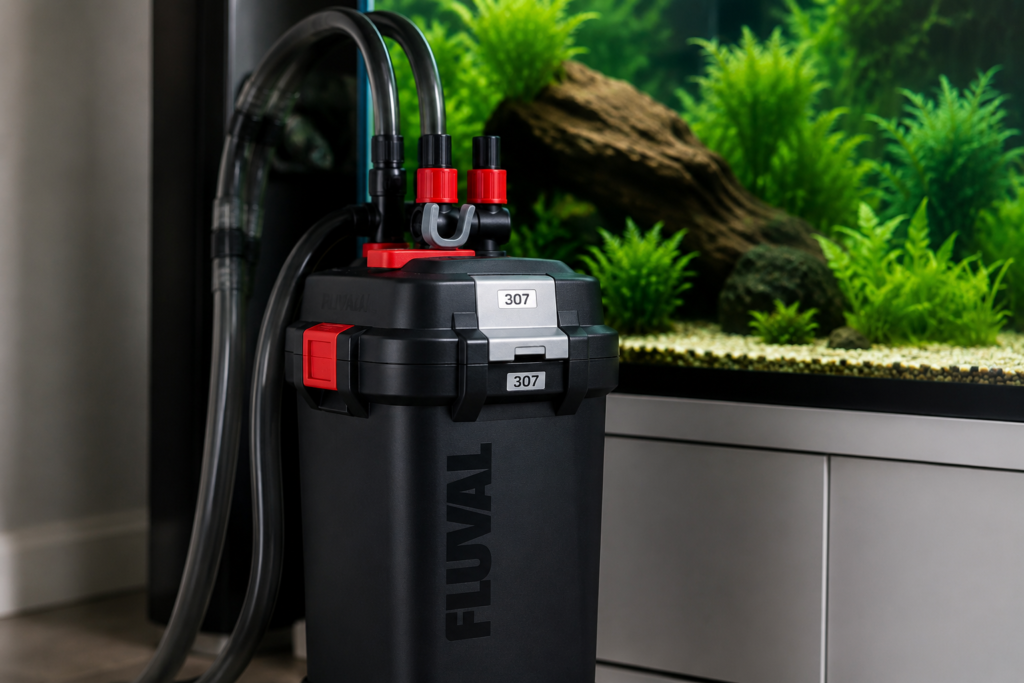
Fluval canister filters are among the most recognized premium filtration systems in the freshwater aquarium hobby. Known for powerful multi-stage filtration, quiet performance, and excellent water polishing capability, Fluval canisters are ideal for hobbyists seeking crystal-clear water and stable long-term tank health.
Pros:
- Exceptional water clarity
- Large media capacity
- Powerful biological filtration
- Quiet operation
- Excellent for planted tanks and aquascapes
Cons:
- Higher price point
- More maintenance complexity than HOB filters
- Requires cabinet or stand space
Ideal For:
Aquascapes, planted aquariums, larger community tanks, and advanced freshwater systems.
Overall Rating:
9.5/10
What To Look For In An Aquarium Filter
Choosing the right aquarium filter depends on several important factors including tank size, livestock type, maintenance preferences, and desired water clarity.
Flow Rate:
A filter should generally circulate the aquarium water several times per hour without creating excessive current for delicate fish or shrimp.
Biological Filtration:
Beneficial bacteria are essential for maintaining healthy nitrogen cycles. Filters with larger biological media capacity tend to support more stable aquariums.
Mechanical Filtration:
Mechanical filtration removes debris, uneaten food, and waste particles that cloud aquarium water.
Noise Level:
Quiet filters are especially important for bedroom aquariums, office tanks, and living room display setups.
Maintenance:
Filters should be easy to clean and maintain consistently to prevent reduced flow and declining water quality.
Aquarium Filter Maintenance Tips
Proper filter maintenance is critical for long-term aquarium stability and consistently clear water.
Clean Mechanical Media Regularly:
Sponges and filter floss should be rinsed periodically using old aquarium water to remove debris while preserving beneficial bacteria.
Avoid Overcleaning:
Never replace all filter media at once. Doing so can disrupt the biological cycle and cause ammonia spikes.
Monitor Flow Rate:
Reduced water flow often indicates clogged media or buildup inside the filter system.
Perform Consistent Water Changes:
Even the best filters work alongside regular aquarium maintenance routines. Weekly water changes help maintain stable water chemistry and reduce waste accumulation.
Inspect Equipment Frequently:
Check impellers, tubing, intake guards, and airline systems regularly to prevent performance issues or unexpected failures.
Final Verdict
The best aquarium filter ultimately depends on your tank size, livestock, maintenance goals, and overall aquarium style. For most beginner freshwater hobbyists, a high-quality Hang-On-Back filter like the AquaClear series offers an excellent balance of performance, affordability, and ease of use.
For shrimp keepers and nano aquariums, sponge filters remain one of the safest and most reliable options available. Meanwhile, advanced aquascapers and larger aquarium owners often benefit from premium canister filters capable of delivering exceptional water clarity and biological stability.
No matter which filtration system you choose, consistency in maintenance and proper stocking practices will always play a major role in maintaining a healthy aquarium ecosystem.